


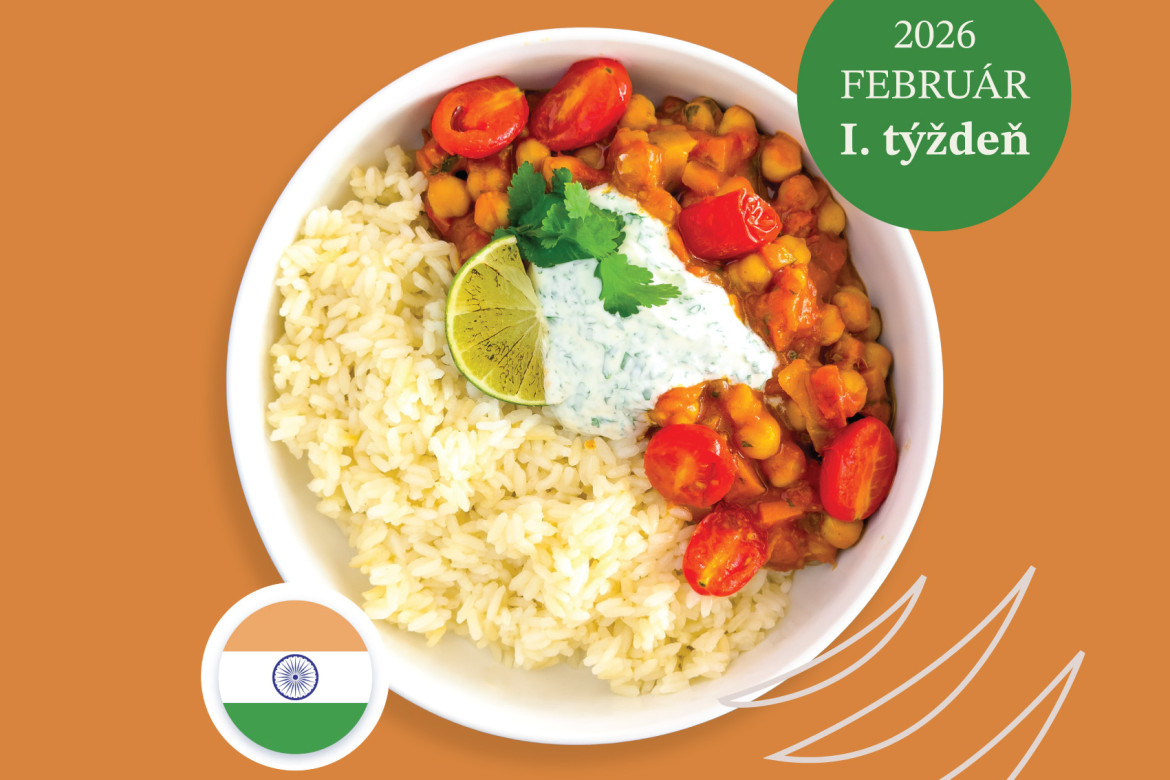
Tomorrow, Wednesday, February 4, you will be able to taste one of the iconic Indian dishes in our canteens. "It's Chana masala – an aromatic chickpea dish that's cooked in a thick tomato-onion sauce flavored with a blend of spices like garam masala, turmeric, cumin, and cilantro. We will serve it with coriander yogurt and the side dish will be basmati rice," Oliver Klapáč introduces the specialty that you will be able to taste tomorrow.
Indian cuisine is one of the most varied and fragrant cuisines in the world. It is based on the rich use of spices that give dishes a distinctive taste, color and aroma. The most typical include turmeric, cumin, coriander, ginger, cardamom, cloves and chilli. Spices are often combined into mixtures, the most famous of which is garam masala.
The great specificity of Indian cuisine is its regional diversity. In the north of India, wheat dishes such as naan pancakes or chapati and dishes with creamy sauces are prevalent. In the south of the country, rice, coconut and coconut milk are used more, with dishes often spicier. The West Indies is known for its bold flavors and sweet-spicy combinations, while the East offers more delicate dishes and delicious desserts.
Indian cuisine is also closely linked to religion and traditions. Many Indians are vegetarians, so we can find a huge number of delicious dishes made from lentils, chickpeas, vegetables or rice. Typical are, for example, dhal, chana masala or palak paneer. Meat is used less, most often chicken or lamb, while beef is taboo for Hindus.
Food in India is not only about satiety, but also about dining together and hospitality. It is often served several small courses at once and is traditionally eaten with the hands, which is supposed to further deepen the contact with the food. Indian cuisine thus represents a combination of taste, tradition and culture that has gained popularity all over the world.


